Keynote Speakers
Keynote Speakers
| Keynote Speaker Ⅰ | ||
 |
||
| Yong Zeng Southeast University, China IEEE Fellow |
||
| Brief Introduction: | ||
| Yong Zeng, IEEE Fellow, Young Chief Professor of Southeast University and Purple Mountain Laboratory, Nanjing, China. He received the Bachelor of Engineering (First-Class Honours) and Ph.D. degrees from Nanyang Technological University (NTU), Singapore. From 2013 to 2018, he was a Research Fellow and Senior Research Fellow at the National University of Singapore (NUS). From 2018 to 2019, he was a Lecturer at the University of Sydney, Australia. Prof. Zeng was listed as Clarivate Analytics Highly Cited Researcher for 7 consecutive years (2019-2025), AI2000 Most Influential Scholars in the field of Internet of Things for 4 consecutive years (2021-2024), Stanford "Top 2% of Scientists in the World - Lifetime Influence". Prof. Zeng is the recipient of Australia Research Council (ARC) Discovery Early Career Researcher Award (DECRA), IEEE Communications Society Asia-Pacific Outstanding Young Researcher Award, and won 10 international and domestic best paper awards including IEEE Marconi Award (2020 and 2024), Heinrich Hertz Award (2017 and 2020), etc. Prof. Zeng proposed the concept of channel knowledge map (CKM), and his works have been cited by more than 38,000 times. He serves on the editorial board of SCI journals such as IEEE Transactions on Communications, IEEE Transactions on Mobile Computing, and IEEE Communications Letters, and leading guest editor of journals including IEEE ComMag, Wireless ComMag, China Communications, and Science China Information Sciences. Prof. Zeng was elevated to IEEE Fellow “for contributions to unmanned aerial vehicle communications and wireless power transfer”. |
||
| Speech Title: | ||
| Low-Altitude UAV Swarm NLoS Localization and Sensing Enabled by CKM | ||
| Abstract: | ||
| Traditional wireless systems primarily follow an "environment-unaware" paradigm, failing to effectively leverage prior knowledge of the local wireless environment. This results in low efficiency for both environmental sensing and channel acquisition, making it difficult to meet the growing performance demands of future wireless communication, sensing, and localization tasks. As a highly promising solution, the Channel Knowledge Map (CKM) has emerged. By fusing massive historical data accumulated from all terminals within a region, CKM learns the intrinsic characteristics of the local propagation environment and constructs a fundamental knowledge representation. Consequently, it allows for the direct acquisition of wireless channel priors solely based on (virtual) terminal location information. This report focuses on Intelligent CKM-Enabled NLoS (Non-Line-of-Sight) Sensing and Localization in Complex Low-Altitude Environments, aiming to address the challenges of sensing and localization when Line-of-Sight (LoS) links are blocked. The presentation will first introduce the principles and intelligent construction methods of CKM, and then elaborate on how a CKM built for communication can be repurposed for sensing and localization, thereby achieving a "kill two birds with one stone" dual benefit. | ||
| Keynote Speaker Ⅱ | ||
 |
||
| Xiaojun Yuan University of Electronic Science and Technology of China, China IEEE Fellow |
||
| Brief Introduction: | ||
| Dr. Xiaojun Yuan is a Distinguished Professor at the National Key Laboratory of Wireless Communications, University of Electronic Science and Technology of China (UESTC), and an IEEE Fellow. He has long been dedicated to cutting-edge fundamental research in statistical signal processing, information theory, and machine learning. He has published over 300 papers (180+ IEEE journals) with over 10,000 Google Scholar citations. His honours include 3 Huawei Spark Awards, the IEEE Heinrich Hertz Best Paper Award, and the IEEE Jack Neubauer Best Paper Award. He has been repeatedly ranked among the World's Top 0.05% Scholars by ScholarGPS and the Highly Cited Chinese Researchers. | ||
| Speech Title: | ||
| Deep Prior Learning Empowered Physical-Layer Signal Processing: A Transformative Paradigm for 6G | ||
| Abstract: | ||
| Classical Bayesian and Shannon theories form the basis of communication design, but their application is limited by the challenge of modelling real-world wireless distributions. This talk introduces a deep-prior-learning driven physical-layer signal processing paradigm by using generative AI, particularly diffusion models, to learn probabilistic priors that enable plug-and-play posterior inference for core communication functionalities. We present two breakthrough applications: neural score-based diffusion for MIMO interference suppression, and parallel variational diffusion that redefines physical-layer processing as parallel interactive inference. Extensive results show that deep prior learning achieves paradigm-shifting performance advances in joint interference suppression, channel estimation, and MIMO detection, as well as in pilot-free MIMO-OFDM semantic communication. Free from Shannon's idealized assumptions, deep neural networks enable communication systems approaching the fundamental limits of information transfer in dynamic, interference-rich environments. | ||
| Keynote Speaker Ⅲ | ||
 |
||
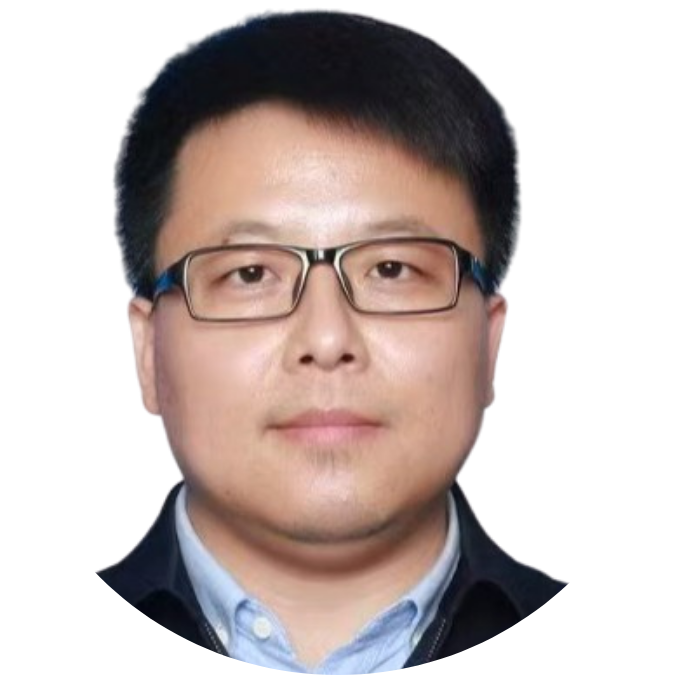
| Yang Zhao Harbin Institute of Technology, Weihai, China |
||
| Brief Introduction: | ||
| Dr. Yang Zhao is a professor and doctoral supervisor of Information and Communication Engineering at Harbin Institute of Technology, the top innovative talents and experts with the outstanding contribution of Jining City. He is the visiting scholar at Northwestern University (USA). He also serve as the director of Weihai Key Lab of Photoacoustic Testing and Sensing Technology in Harbin Institute of Technology (Weihai). His research interests include the photoacoustic detection, ultrasonic testing and laser-generated sound communication. His research work was supported by National Natural Science Foundation of China, International Cooperation Project supported by Ministry of Science and Technology and Outstanding Young Scientist Plan of Shandong Province, etc. He obtained the honor of outstanding young scientist in Shandong Academy of Sciences. Dr. Zhao has over 90 technical publications, in which more than 60 publications are indexed by SCI/EI. He won the Chinese technology market Science and Technology Golden Bridge Award, China Optical Engineering Society science and technology progress second prize, and Jining City Science and Technology progress first prize. | ||
| Speech Title: | ||
| Air-Water Cross-Medium Communication by Using a Photoacoustic Method | ||
| Abstract: | ||
| The Air-Water Cross-Medium Communication (AWCMC) is significant for ocean exploration. The selection of photoacoustic conversion mechanism, modulation method, and underwater sound detection method is critical in solving the problem of AWCMC based on laser-generated sound (LGS) technology. This presentation describes a photoacoustic system used for AWCMC based on a pulsed laser and a fiber optic hydro-acoustic sensor. The pulsed laser is modulated by the way of on-off keying (OOK) modulation, pulse position modulation (PPM) and Frequency-shift keying (FSK) modulation, respectively. Then, thermal expansion was suggested to generate the sound signal at the air-water interface. A novel hydro-acoustic sensor with high sensitivity was developed by utilizing the distributed feedback fiber laser (DFB-FL). The hydro-acoustic sensor uses an enhanced single-path differential divide and differential self-multiplication (SDD-DSM) algorithm in conjunction with a phase-generate carrier (PGC) type demodulation technique to detect LGS signals with great sensitivity. After filtering, envelope extraction, and digital shaping of LGS signals, the modulated information was successfully decoded, demonstrating the potential of OOK-LGS, PPM-LGS and FSK-LGS based on the given photoacoustic communication system applied to the AWCMC. | ||
| Keynote Speaker Ⅳ | ||
 |
||
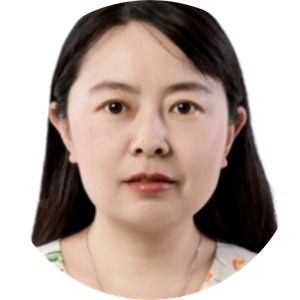
| Yajuan Xue Chengdu University of Information Technology, China |
||
| Brief Introduction: | ||
| Prof. Xue Ya-juan, Ph.D. Supervisor. She is a distinguished expert with outstanding contributions in Sichuan Province, a candidate for the Provincial Academic and Technical Leader, a recipient of the Sichuan Provincial Outstanding Youth Academic and Technical Leader Funding Program, and a high-level overseas returnee scholar in Sichuan Province. She was nominated for the International Eni Award in 2016 and served as a nationally sponsored visiting scholar at the Department of Exploration Geophysics, Curtin University, Australia in 2018. In recent years, she has published over 130 papers in high-level domestic and international journals and major academic conferences, including 60 SCI-indexed papers (13 in SCI TOP journals) and 75 EI-indexed papers. She has authored 2 monographs and been granted 14 invention patents. She has led 20 vertical research projects, including projects funded by the National Natural Science Foundation of China (NSFC), and the Sichuan Provincial Outstanding Youth Academic and Technical Leader Funding Program, as well as multiple industry-sponsored collaborative projects. Additionally, as a key research member, she has participated in 5 national-level projects, including NSFC Joint Fund projects, key projects, general projects. She has received 3 provincial and ministerial level science and technology awards. She is a Senior Member of IEEE and SEG. She serves on the editorial boards of several journals. She is also a review expert for national and provincial science/talent programs and a peer reviewer for over 40 international SCI journals. Her research interests include signal processing & information extraction, and their applications in earth exploration. |
||
| Speech Title: | ||
| VMD-Schrodinger IT: A Novel Quantum-Inspired Seismic Denoising Framework for Complex Dipping Events | ||
| Abstract: | ||
| Seismic random noise severely degrades signal-to-noise ratio and hampers subsequent inversion and interpretation, particularly in areas with complex dipping structures. Conventional denoising methods—such as wavelet thresholding and empirical mode decomposition (EMD)-based approaches—often suffer from signal leakage, mode mixing, or inadequate preservation of weak high- and low-frequency components. We propose a robust denoising framework that integrates Variational Mode Decomposition (VMD) with Schrödinger equation thresholding, termed the VMD-Schrödinger Interval-Thresholding (VMD-Schrödinger IT) method. Unlike EMD, VMD provides a theoretically well-founded, mode-mixing-free decomposition that separates seismic traces into narrowband intrinsic mode functions (IMFs). For IMFs with strong or moderate correlation to the original signal, we apply Schrödinger-equation-based denoising with adaptive reference signals. For IMFs with weak correlation (dominated by noise), we introduce a novel noise-recycling strategy: multiple perturbed noise realizations are generated by resampling the extracted noise, and the averaged denoised outputs effectively recover weak signals buried in noise-dominant components. Synthetic tests with dipping events and complex benchmark datasets demonstrate that our method consistently achieves higher post-denoising SNR, lower RMSE, and significantly less signal leakage than wavelet thresholding, EMD interval-thresholding, and the standalone quantum-based denoiser—especially at low input SNRs (2–5 dB). Field data from a deep carbonate reservoir and a shale gas reservoir in China further confirm that the VMD-Schrödinger IT method preserves continuous event continuity and subtle structural details while removing background noise with minimal useful-signal loss. These results suggest that combining physics-based adaptive decomposition with quantum-inspired thresholding offers a promising pathway for high-fidelity seismic noise attenuation in structurally complex settings. This work is supported by the National Natural Science Foundation of China under Grants 42474145. We also thank the special project of Advanced Cryptography System Security Key Laboratory of Sichuan Province for its support (Grant No. 25ZDSYS002806). |
||